
Quick Summary
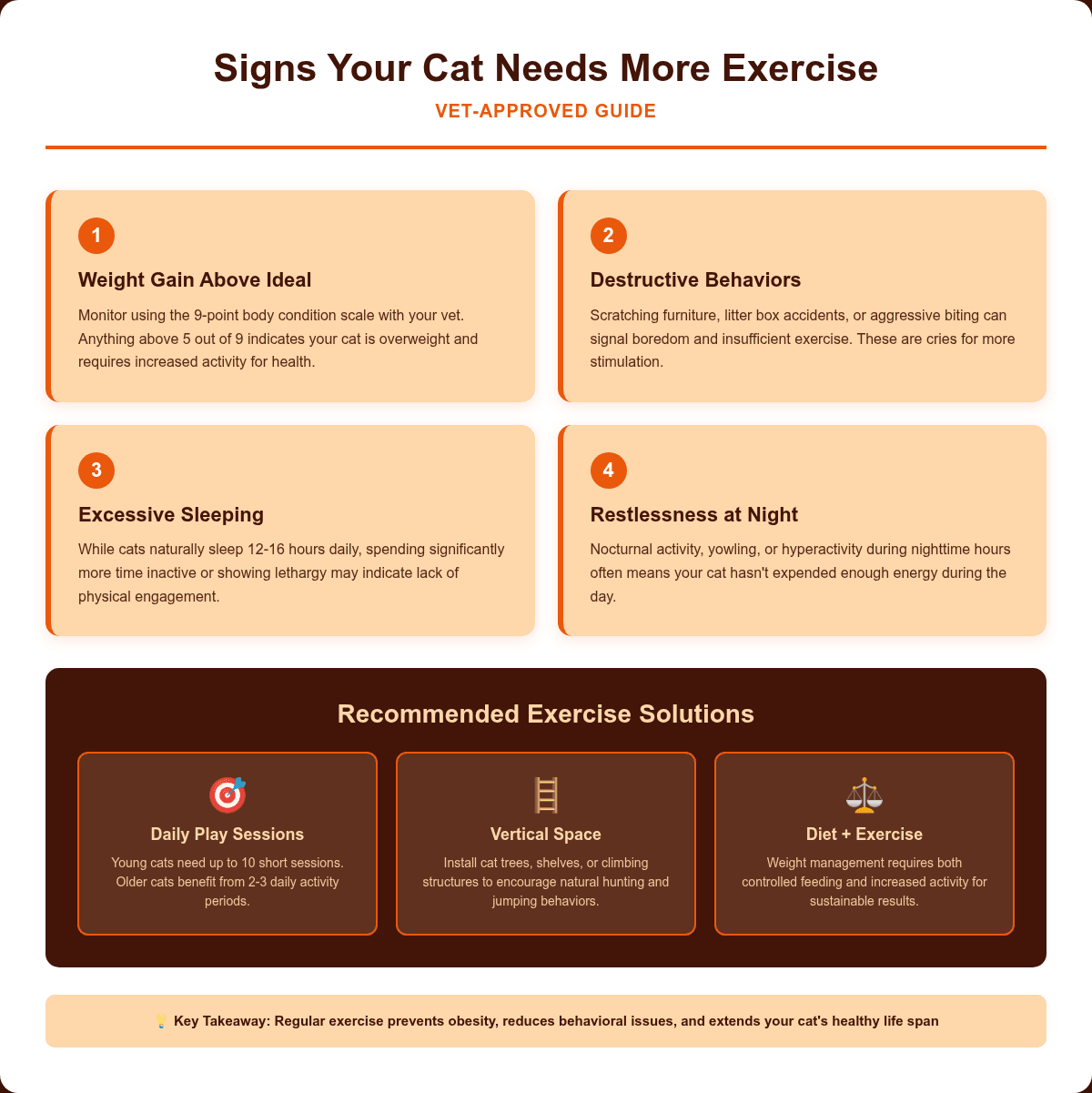
- Monitor your cat’s weight: Use the 9-point body condition scale with your vet—anything above 5 out of 9 indicates your cat is overweight and needs increased activity
- Watch for destructive behaviors: Scratching furniture, litter box accidents, or aggressive biting can signal boredom and insufficient exercise
- Aim for multiple play sessions daily: Young cats and kittens need up to 10 short play sessions, while older cats benefit from 2-3 daily activity periods
- Create vertical space: Install cat trees, shelves, or climbing structures to encourage natural hunting and jumping behaviors indoors
- Combine diet and exercise: Weight management requires both controlled feeding and increased activity for sustainable results
Overview
You’ve probably noticed your cat spending most of the day curled up in that sunny spot by the window, barely moving except for meals and the occasional trek to the litter box. While cats naturally sleep 12-16 hours per day, the line between normal feline laziness and genuine inactivity can be surprisingly thin. Understanding cat exercise signs becomes crucial in the first 50 words of addressing your pet’s health, especially for indoor cats who don’t have the natural stimulation of outdoor exploration and hunting.
Unlike dogs who eagerly signal their need for walks and playtime, cats are masters of subtlety. They won’t bring you their leash or whine at the door. Instead, they communicate their exercise needs through quieter signals—changes in behavior, shifts in mood, and yes, changes in their physical appearance. The challenging part is that many cat owners mistake their pet’s sedentary lifestyle for normal feline behavior, not realizing their beloved companion is actually showing signs of insufficient activity until health problems develop.
The good news is that once you know what to look for, these signs become unmistakable. Even better, addressing them doesn’t require transforming your home into a feline gymnasium or spending hours each day engaging your cat. Let’s explore the vet-approved indicators that your cat needs more movement and practical ways to incorporate healthy activity into their daily routine.
The Two Primary Cat Exercise Signs Every Owner Should Know
Weight Gain and Body Condition Changes
Dr. Jordyn Zoul, a veterinarian at Seaside Veterinary Hospital on St. Simons Island, Georgia, identifies weight as the most obvious indicator that your cat needs increased activity. The statistics are sobering: house cats are commonly overweight, and it’s not hard to understand why. When your cat sleeps more than half the day away and doesn’t need to hunt for their meals, those extra pounds accumulate quickly and quietly.
Veterinarians use a body condition scoring system that grades cats on a scale of 9 points. This standardized assessment evaluates your cat’s overall body composition by examining their ribs, waistline, and abdominal tuck. A score of 4 or 5 out of 9 represents the ideal weight range. Anything above this threshold means your cat has entered overweight territory and needs intervention. According to the American Veterinary Medical Association, excess weight in cats increases their risk for diabetes, arthritis, and heart disease, making early identification critical.
During your cat’s wellness exam, your veterinarian will assess this body condition score, but you can also learn to evaluate it at home. Run your hands along your cat’s sides—you should be able to feel their ribs without pressing hard, but the ribs shouldn’t be visibly protruding. Looking from above, your cat should have a visible waist behind the ribs. From the side, the belly should tuck up slightly rather than hanging down or appearing distended.
The challenge with weight-related cat exercise signs is that changes happen gradually. You see your cat every day, making it difficult to notice the slow accumulation of extra pounds. Many owners don’t realize their cat has become overweight until their veterinarian points it out during a routine exam. This is why regular weigh-ins and body condition assessments matter so much—they provide objective data that cuts through our subjective perception.
Destructive and Disruptive Behaviors
While weight gain might be the most visible indicator, behavioral changes often appear first, serving as an early warning system that your cat isn’t getting sufficient mental and physical stimulation. Dr. Zoul emphasizes that destructive behaviors frequently rear their ugly heads when cats need more exercise and enrichment. These behaviors manifest in several distinct ways.
Furniture scratching becomes more aggressive and widespread. Rather than using their designated scratching post occasionally, bored cats might target multiple pieces of furniture, curtains, or even walls. They’re not being malicious—they’re burning excess energy and seeking stimulation in whatever way they can find it. The ASPCA notes that scratching serves multiple purposes for cats, including exercise, territorial marking, and stress relief, so increased scratching often signals unmet activity needs.
Litter box problems represent another red flag. When cats begin eliminating outside their designated area despite having a clean box available, the cause might be stress, boredom, or insufficient activity. An under-exercised cat may develop anxiety or territorial issues that manifest as inappropriate elimination. This becomes particularly concerning because once the pattern starts, it can become habitual even after you address the underlying cause.
Aggressive behaviors like biting or scratching their human family members also increase when cats lack appropriate outlets for their predatory instincts. Indoor cats retain all the hunting drives of their outdoor counterparts, but without proper exercise and play, that energy gets misdirected. You might notice your cat ambushing your ankles as you walk by, attacking your hands during petting sessions, or becoming generally more irritable and quick to swipe.
Additional Warning Signs That Complement the Main Indicators
Beyond the two primary cat exercise signs identified by veterinarians, several secondary indicators can help you build a complete picture of your cat’s activity needs. These subtler signs often appear before weight gain becomes noticeable or behaviors become truly destructive.
Excessive vocalization, especially during nighttime hours, frequently indicates insufficient daytime activity. Cats are naturally crepuscular, meaning they’re most active at dawn and dusk, but indoor cats without adequate exercise may shift their activity patterns entirely to nighttime when the household becomes quiet. If your previously quiet cat suddenly becomes a midnight yowler, they might be trying to tell you they’re bored and understimulated.
Decreased grooming or, conversely, obsessive over-grooming both signal potential problems. A cat who stops maintaining their coat properly might be dealing with obesity that makes reaching certain areas difficult, or they might be experiencing lethargy from insufficient activity. On the flip side, a cat who grooms obsessively to the point of creating bald patches might be self-soothing due to stress and boredom—conditions that appropriate exercise helps alleviate.
Watch for changes in your cat’s engagement with their environment. Does your once-curious cat no longer investigate new items in the home? Do they ignore toys that previously captured their attention? This declining interest in their surroundings suggests they’re settling into a monotonous routine that lacks sufficient stimulation. Healthy, well-exercised cats maintain curiosity about their environment throughout their lives.
Creating an Effective Exercise Plan for Your Indoor Cat
The prescription for addressing cat exercise signs involves a dual approach: dietary management and increased physical activity. Dr. Zoul emphasizes that reaching the goal body condition score of 5 out of 9 works best when you combine both strategies. Exercise alone rarely produces significant weight loss without caloric control, but diet alone leaves your cat bored, frustrated, and prone to muscle loss rather than fat loss.
Interactive play sessions form the cornerstone of any feline exercise program. Unlike dogs who might enjoy a long walk, cats benefit more from multiple short bursts of intense activity that mimic hunting patterns. According to veterinary exercise guidance, kittens and young cats need up to 10 play sessions daily, while older cats should have at least 2-3 dedicated activity periods. These don’t need to be lengthy—even five to ten minutes of vigorous play makes a significant difference.
The key to successful play sessions lies in engaging your cat’s predatory instincts. Wand toys with feathers or small prey-like attachments work exceptionally well because they allow you to create realistic hunting scenarios. Move the toy erratically, let it “hide” behind furniture, and allow your cat to successfully “capture” their prey periodically. This satisfies their need to hunt and provides intensive physical activity as they stalk, chase, pounce, and wrestle with their target.
Environmental enrichment extends exercise opportunities beyond structured play time. Creating vertical space gives cats additional territory to explore and defend, naturally increasing their activity levels. Cat trees, wall-mounted shelves arranged as climbing paths, and window perches all encourage jumping, climbing, and exploring behaviors. The Cornell Feline Health Center recommends providing multiple levels in your home specifically to promote natural feline movement patterns.
Food puzzles and feeding toys transform mealtime from a passive activity into an engaging exercise opportunity. Rather than simply placing food in a bowl, these devices require your cat to work for their meals by pawing, rolling, or manipulating the puzzle to release kibble. This approach mimics the mental and physical effort cats would naturally expend hunting prey while also slowing eating speed and increasing meal satisfaction.
Rotate toys regularly to maintain novelty and interest. Cats quickly become bored with the same toys when they’re constantly available. Instead, keep several sets of toys and rotate them weekly, bringing out “new” items while storing others away. This simple strategy keeps toys interesting and engaging without requiring constant purchases.
Important Considerations When Increasing Your Cat’s Activity
Before dramatically increasing your cat’s exercise regimen, especially if they’re significantly overweight or older, consult with your veterinarian. Cats with undiagnosed conditions like heart disease, arthritis, or diabetes require modified exercise approaches. Your vet can provide clearance for activity and help you develop an appropriate progression plan that builds fitness gradually without risking injury.
Start slowly and progress incrementally. A cat who has been sedentary for months or years cannot suddenly engage in intense daily activity without risk. Begin with just a few minutes of gentle play once or twice daily, then gradually increase duration and intensity as your cat’s fitness improves. Watch for signs of overexertion including excessive panting, refusing to move, or lethargy that persists for hours after play.
Recognize that weight loss in cats requires patience and consistency. Safe feline weight loss typically occurs at a rate of 1-2% of body weight per week, meaning a 15-pound cat should lose approximately 2-4 ounces weekly. Faster weight loss, particularly in overweight cats, can trigger hepatic lipidosis, a serious liver condition. This makes the combination of modest calorie restriction and increased activity far safer than aggressive dieting alone.
Be aware of common mistakes that undermine exercise efforts. One frequent error is assuming that having another cat in the home automatically provides sufficient activity. While some cats do play together regularly, many coexist peacefully without engaging in significant activity. You still need to provide interactive play opportunities even in multi-cat households.
Another mistake involves treating toys as a substitute for interactive play. Battery-operated mice or automatic laser toys can supplement your efforts, but they can’t replace the bonding and engagement that happens during interactive play sessions with you. Cats are social creatures who benefit from the relationship building that occurs during shared play time.
Activity Requirements Across Different Life Stages
| Life Stage | Daily Play Sessions | Session Duration | Activity Type | Special Considerations |
|---|---|---|---|---|
| Kitten (2-6 months) | 8-10 short sessions | 5-10 minutes each | High-energy chasing, pouncing, climbing | Avoid repetitive jumping on hard surfaces; growth plates still developing |
| Young Adult (6 months-3 years) | 4-6 sessions | 10-15 minutes each | Intense hunting-style play, vertical exploration | Peak energy period; needs most activity |
| Mature Adult (3-7 years) | 2-4 sessions | 10-20 minutes each | Mix of moderate chasing and puzzle toys | May begin showing preferences for specific activities |
| Senior (7-11 years) | 2-3 sessions | 10-15 minutes each | Gentler interactive play, food puzzles | Monitor for arthritis signs; adjust intensity accordingly |
| Geriatric (11+ years) | 2-3 sessions | 5-10 minutes each | Low-impact movement, mental enrichment | Focus on maintaining mobility; arthritis management critical |
Measuring Progress and Adjusting Your Approach
Tracking your cat’s response to increased activity helps you gauge whether your efforts are working and when adjustments are needed. Weigh your cat weekly using the same scale at approximately the same time of day. Record these weights to identify trends that might not be apparent from week to week. Your veterinarian can help you establish target milestones and evaluate whether progress is occurring at a safe, sustainable rate.
Photograph your cat monthly from consistent angles—directly from above and from each side. Visual documentation often reveals body composition changes that numbers alone might not capture. You might notice muscle development, a more defined waistline, or improved posture even during periods when weight loss seems to plateau.
Monitor changes in the behavioral indicators that first signaled problems. Has furniture scratching decreased? Are litter box accidents becoming less frequent? Is your cat sleeping more peacefully through the night? These behavioral improvements often appear before significant weight loss, providing early confirmation that your exercise program is addressing underlying needs.
Reassess your strategy every 4-6 weeks. If your cat isn’t losing weight or behavioral problems persist despite consistent exercise efforts, you may need to adjust feeding amounts, increase activity frequency or intensity, or investigate potential medical issues that could be impeding progress. Conversely, if your cat is losing weight too rapidly or seems exhausted and disinterested, you might need to reduce intensity or extend rest periods between play sessions.
Frequently Asked Questions
What is the 3-3-3 rule for cats?
The 3-3-3 rule for cats refers to the adjustment period when bringing a new cat home: three days to decompress in their new environment, three weeks to start learning your routine and settling in, and three months to fully feel at home and show their true personality. While this rule primarily addresses adoption transitions rather than exercise needs, it’s important to understand that newly adopted cats may not display normal activity levels during their adjustment period, potentially masking whether they’re getting adequate exercise.
What is the number one meat you should never feed your cat?
The meat you should never feed your cat is raw pork, particularly due to the risk of parasites and bacteria like Trichinella and Salmonella. However, this question relates more to nutrition than exercise. What’s more relevant to addressing cat exercise signs is ensuring that your cat’s overall diet supports their activity level—higher protein, controlled portions, and feeding methods that encourage natural hunting behaviors all complement an exercise program designed to maintain healthy weight and prevent destructive behaviors.
How do I know if my cat is getting enough exercise?
You’ll know your cat is getting enough exercise when they maintain a healthy body condition score of 4-5 out of 9, display consistent contentment without destructive behaviors, sleep peacefully through the night, and show appropriate interest in their environment during waking hours. A well-exercised cat engages readily during play sessions but also rests calmly between activities without exhibiting boredom-related behaviors like excessive vocalization, aggressive play toward humans, or inappropriate elimination. Regular veterinary checkups help confirm that activity levels are supporting overall health and preventing obesity-related conditions.
Can too much exercise harm my cat?
Yes, excessive exercise can harm cats, particularly those who are obese, older, or have underlying health conditions. Signs of overexertion include excessive panting (cats shouldn’t pant heavily during normal play), extreme lethargy that lasts hours after activity, limping, or refusing to eat. The key is gradual progression—start with brief, gentle sessions and slowly increase intensity as your cat builds fitness. If your cat shows signs of distress during or after exercise, immediately reduce intensity and consult your veterinarian to rule out conditions like heart disease or arthritis that require modified activity approaches.
Final Thoughts
The most important takeaway about cat exercise signs is that they’re trying to tell you something before serious health problems develop. Weight gain and destructive behaviors aren’t character flaws or inevitable consequences of indoor living—they’re communication from your cat that their physical and mental needs aren’t being met. The beautiful aspect of addressing these signs is that the solution benefits both of you: structured play sessions strengthen your bond while improving your cat’s health, turning exercise from a chore into an enjoyable shared experience. Start small, stay consistent, and remember that even modest increases in daily activity can prevent years of obesity-related health problems down the road.
This article is for informational purposes only and is not intended to replace professional veterinary advice, diagnosis, or treatment. Always consult with your veterinarian before making significant changes to your cat’s diet or exercise routine, especially if your cat has existing health conditions or is significantly overweight.
Disclaimer: This article is for informational purposes only and is not a substitute for professional veterinary advice. Always consult your vet for your pet’s health concerns.
Source: MSN · 20 hours ago