
Quick Summary
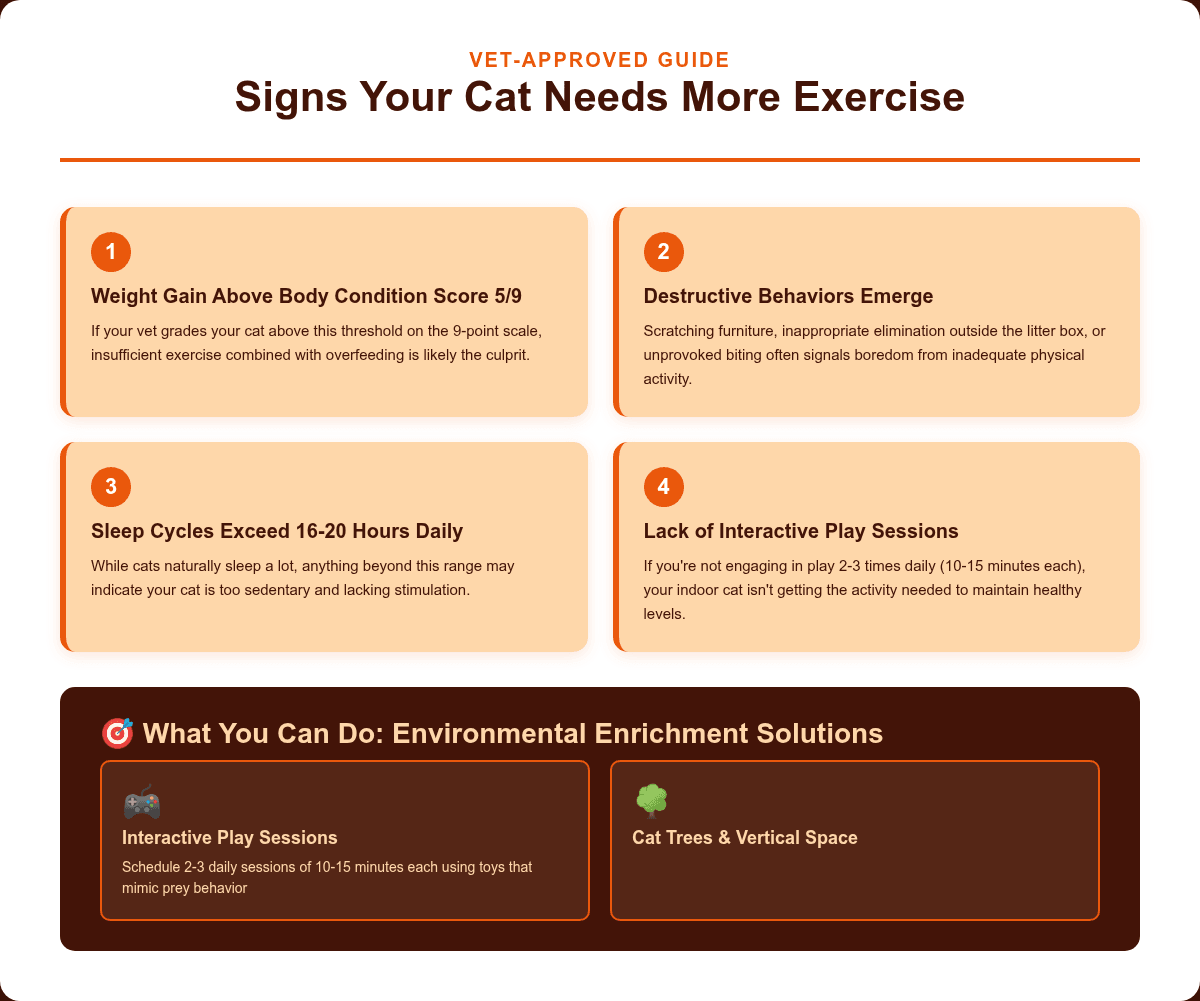
- Weight gain above body condition score 5/9: If your vet grades your cat above this threshold on the 9-point scale, insufficient exercise combined with overfeeding is likely the culprit
- Destructive behaviors emerge: Scratching furniture, inappropriate elimination outside the litter box, or unprovoked biting often signals boredom from inadequate physical activity
- Sleep cycles exceed 16-20 hours daily: While cats naturally sleep a lot, anything beyond this range may indicate your cat is too sedentary
- Interactive play sessions should occur 2-3 times daily: Each session lasting 10-15 minutes helps maintain healthy activity levels for indoor cats
- Environmental enrichment prevents behavioral issues: Cat trees, puzzle feeders, and rotating toys address both exercise needs and mental stimulation simultaneously
Overview
You’ve probably noticed your cat spending most of the day curled up in that sunny spot by the window. While cats are naturally champion sleepers—sometimes logging up to 16 hours of rest daily—there’s a fine line between normal feline behavior and a genuinely sedentary lifestyle that’s impacting your cat’s health. Understanding cat exercise signs within the first few weeks of behavioral changes can make the difference between a minor lifestyle adjustment and a serious health intervention down the road.
Unlike dogs who enthusiastically demand walks and playtime, cats are subtle communicators. They won’t bring you their leash or whine at the door when they need more activity. Instead, they show us through their bodies and behaviors—weight creeping up around the midsection, sudden interest in shredding your favorite couch, or those midnight zoomies that wake the entire household. As responsible cat owners, learning to recognize these signals helps us provide the enriched, active lifestyle our indoor cats need to thrive.
The modern indoor cat faces a unique challenge. Without the need to hunt for meals or patrol territory outdoors, many house cats simply aren’t getting the movement their bodies were designed for. According to veterinary experts, this sedentary lifestyle is contributing to an epidemic of feline obesity and behavior problems that are entirely preventable with the right approach to exercise and enrichment.
The Two Primary Cat Exercise Signs Every Owner Should Know
Dr. Jordyn Zoul, a veterinarian at Seaside Veterinary Hospital on St. Simons Island, Georgia, identifies two major indicators that your feline companion needs more physical activity in their daily routine. These signs often appear gradually, making them easy to overlook until they become significant problems.
Being Overweight: The Most Obvious Indicator
Picture this: you’re petting your cat and realize you can’t easily feel their ribs anymore, or you notice their belly sways noticeably when they walk. These are classic signs that your cat has packed on extra pounds. House cats are commonly overweight, and it’s not hard to understand why. When you sleep more than half your day away and don’t have to hunt for food, adding pounds becomes almost inevitable.
The most reliable way to determine if your cat is overweight involves veterinary assessment using a body condition scoring system. Veterinarians grade cats on a body condition scale out of 9, where the ideal score is 4 to 5 out of 9. Anything above this range indicates your cat is carrying excess weight. Getting to that goal of 5/9 requires a two-pronged approach: adjusting diet and increasing exercise. According to the AVMA (American Veterinary Medical Association), obesity affects approximately 60% of domestic cats in the United States, making it one of the most common health issues veterinarians encounter.
Your veterinarian can teach you how to perform a simple home assessment. When you look at your cat from above, you should see a visible waist behind the ribs. From the side, there should be an abdominal tuck—the belly shouldn’t hang down or sway. When you run your hands along your cat’s sides, you should feel the ribs with just a slight fat covering. If you have to press firmly to feel ribs, or can’t feel them at all, your cat likely needs more movement in their life.
Engaging in Destructive Behaviors: The Hidden Sign
Weight isn’t the only indicator that your cat needs more exercise and enrichment. Sometimes behavioral changes arrive first, catching owners off guard. Imagine coming home to find your cat has scratched deep gouges into your leather sofa, or discovering accidents outside the litter box despite your cat being perfectly house-trained for years. These frustrating behaviors often stem from boredom and pent-up energy rather than behavioral disorders or medical issues.
While weight remains the most obvious indicator of needing exercise, destructive behaviors often start appearing when cats lack sufficient mental and physical stimulation. Scratching furniture, soiling the house, biting or scratching humans, and other disruptive activities could signal that your cat is bored and needs more exercise and enrichment opportunities. Before assuming these behaviors indicate a behavioral problem requiring medication or rehoming, consider whether your cat is simply understimulated.
Cats are natural predators with instincts to stalk, chase, pounce, and capture prey. When these drives aren’t satisfied through appropriate play and activity, the energy has to go somewhere. Sometimes it manifests as 3 AM zoomies through the house, knocking things off counters, or aggressive play toward human feet under blankets. These aren’t signs of a “bad cat”—they’re communication that your cat’s exercise needs aren’t being met.
Additional Physical and Behavioral Cat Exercise Signs
Beyond the two primary indicators Dr. Zoul identifies, several other signs can alert observant cat owners to insufficient exercise levels. Recognizing these subtler signals allows you to intervene earlier, before weight gain or destructive behaviors become entrenched patterns.
A common pattern owners notice is changes in sleep schedule and energy distribution throughout the day. If your cat sleeps more than 20 hours daily and shows little interest in their surroundings during waking hours, this excessive lethargy suggests inadequate stimulation. While cats naturally sleep 16-20 hours daily, spending nearly all day unconscious isn’t normal, even for felines.
Another telling sign involves your cat’s response to play invitations. A well-exercised cat will tire relatively quickly during play sessions—usually within 10-15 minutes of active engagement. However, if your cat loses interest after just 30 seconds of batting at a toy, or conversely, plays frantically for extended periods without seeming satisfied, both extremes indicate exercise imbalances. The cat who quits immediately may be too out of shape to sustain activity, while the one who never seems tired might be compensating for too many sedentary hours.
Physical changes beyond obvious weight gain also provide clues. Loss of muscle tone, particularly in the hind legs, suggests insufficient activity. You might notice your cat struggling with jumps they once made easily, or showing reluctance to climb their cat tree. The ASPCA notes that maintaining muscle mass through regular exercise becomes increasingly important as cats age, helping prevent arthritis and mobility problems.
Behavioral changes extend beyond destructive activities. Some cats develop attention-seeking behaviors like excessive vocalization, pestering owners constantly, or displaying increased aggression during petting sessions. These behaviors often reflect frustration from an understimulated mind and underused body. Rather than viewing these as personality quirks, consider them potential cat exercise signs pointing toward unmet activity needs.
How to Safely Increase Your Cat’s Exercise
Once you’ve identified that your cat needs more movement, implementing changes requires strategy and patience. Cats aren’t marathon runners—they’re sprinters designed for short bursts of intense activity followed by rest. Understanding this natural rhythm helps you create an exercise program your cat will actually enjoy and sustain.
The foundation of feline exercise revolves around interactive play sessions that mimic hunting behavior. Schedule exercise for cats when they’re most active, typically during dawn and dusk hours when their predatory instincts naturally peak. These crepuscular activity patterns mean your cat is biologically programmed to be most energetic at times that might not align perfectly with your schedule, but working with their natural rhythms produces better results than fighting against them.
Start with brief play sessions—just 5 minutes twice daily for sedentary or overweight cats. Gradually build up to 10-15 minute sessions occurring 2-3 times daily as your cat’s fitness improves. The goal involves getting your cat’s heart rate up and encouraging running, jumping, and pouncing movements. Wand toys with feathers or small attachments work exceptionally well because they allow you to control the “prey” movement, creating an engaging hunting scenario.
Environmental enrichment addresses both physical exercise and mental stimulation simultaneously. To increase calorie expenditures in an indoor cat, you must consciously promote activity and exercise inside the home. Cat trees and vertical spaces encourage climbing and jumping while satisfying territorial instincts. Place these structures near windows so your cat can observe outdoor activity, providing mental enrichment alongside physical benefits.
Food puzzles and treat-dispensing toys transform mealtime into an activity that requires problem-solving and movement. Rather than serving all meals in a bowl, hide small portions around the house or use puzzle feeders that make your cat work for their food. This mimics the mental and physical effort of hunting, burning calories while preventing boredom. Some owners even hide kibble throughout the house, turning their cat’s entire environment into a feeding treasure hunt.
Rotation and novelty keep play interesting. Cats quickly lose interest in toys that are always available. Instead, rotate toys weekly, bringing out different options to maintain novelty and excitement. This strategy makes “old” toys feel new again when they reappear after being stored away.
For multiple-cat households, exercise dynamics become more complex. Some cats play together naturally, providing each other with exercise through chase games and wrestling. Others prefer solo activities. Observe your cats’ interactions and provide both group play opportunities and individual attention to ensure each cat gets adequate exercise tailored to their preferences.
Important Considerations When Increasing Cat Exercise
Before launching into a new exercise regimen, several important factors deserve careful consideration. Rushing the process or overlooking individual cat needs can lead to injuries, stress, or abandonment of the program altogether.
Always consult your veterinarian before starting an exercise program, especially for overweight, senior, or previously sedentary cats. Underlying health conditions like heart disease, arthritis, or joint problems may require modifications to exercise approaches. Your vet can help design a safe, appropriate activity plan based on your cat’s specific health status, age, and current fitness level.
Start slowly and build gradually. A cat who hasn’t exercised in months or years cannot suddenly engage in intense activity without risk. Just as humans need conditioning time, cats require gradual fitness building. Pushing too hard too fast risks muscle strains, exhaustion, or creating negative associations with play that make future exercise attempts even harder.
Watch for signs of overexertion during play sessions. Heavy panting, open-mouth breathing, or refusal to continue playing indicates your cat needs to stop and rest. Unlike dogs, cats rarely pant during normal activity, so open-mouth breathing suggests excessive exertion. If this occurs, end the session immediately and provide water. Over time, as your cat’s fitness improves, they’ll be able to sustain longer activity periods without distress.
Common mistakes include expecting instant results, forcing exercise on an unwilling cat, or relying solely on exercise without addressing diet. Weight loss in cats requires both increased activity and appropriate caloric intake. Exercise alone typically won’t produce significant weight loss if your cat continues consuming too many calories. According to research from VCA Animal Hospitals, safe feline weight loss should occur gradually at a rate of 1-2% of body weight per week, achieved through the combination of diet management and increased exercise.
Another pitfall involves humanizing exercise expectations. Cats don’t need or want 30-minute continuous exercise sessions. Their natural hunting pattern involves short bursts of intense energy—stalking, chasing, pouncing—followed by rest. Design play sessions around this natural pattern rather than expecting sustained aerobic activity.
Reference Guide: Cat Body Condition and Exercise Recommendations
| Body Condition Score | Physical Description | Recommended Exercise Frequency | Session Duration | Exercise Type Priority |
|---|---|---|---|---|
| 1-3/9 (Underweight) | Ribs, spine, hip bones visible; no fat covering | 2-3 times daily | 5-10 minutes | Focus on building muscle; gentle play; consult vet |
| 4-5/9 (Ideal) | Ribs easily felt; visible waist; abdominal tuck | 2-3 times daily | 10-15 minutes | Maintain variety; mix hunting play with climbing |
| 6-7/9 (Overweight) | Ribs difficult to feel; no waist; rounded abdomen | 3-4 times daily | Start 5 minutes, build to 10-15 | Low-impact initially; wand toys; food puzzles |
| 8-9/9 (Obese) | Ribs cannot be felt; massive fat deposits; distended abdomen | 4-5 times daily | Start 3-5 minutes, very gradual increase | Veterinary supervision required; seated play; laser pointers |
Frequently Asked Questions
What is the 3-3-3 rule for cats?
The 3-3-3 rule refers to the adjustment timeline when cats enter new environments, such as adoption or moving homes. It suggests cats need approximately 3 days to decompress, 3 weeks to learn their environment, and 3 months to fully settle and show their true personality. This rule reminds owners to be patient with behavioral changes and to establish consistent routines—including exercise routines—gradually rather than expecting immediate adaptation.
How do I know if my cat is getting enough exercise?
Your cat is likely getting adequate exercise if they maintain a healthy body condition score of 4-5/9, show interest in play sessions but tire appropriately within 10-15 minutes, demonstrate good muscle tone (particularly in hindquarters), and don’t exhibit boredom-related destructive behaviors. Regular veterinary checkups provide professional assessment of your cat’s physical condition, helping you confirm whether current activity levels meet their needs.
Can indoor cats get enough exercise without going outside?
Absolutely. Indoor cats can achieve excellent fitness levels through structured play sessions, environmental enrichment, and creative activity solutions. The key involves consciously providing the physical and mental stimulation that outdoor cats naturally encounter while roaming. Vertical spaces, interactive toys, food puzzles, and regular play sessions effectively replicate the exercise outdoor cats get through territorial patrol and hunting activities.
How long should I play with my cat each day?
Most cats benefit from 20-30 minutes of total active playtime daily, divided into 2-3 shorter sessions of 10-15 minutes each. This schedule aligns with cats’ natural hunting patterns—short bursts of intense activity rather than sustained exercise. Individual needs vary based on age, health, and personality, so adjust based on your cat’s response and consult your veterinarian for personalized recommendations.
Final Thoughts
Recognizing cat exercise signs empowers you to intervene before inactivity creates serious health consequences for your feline companion. The two primary indicators—being overweight and engaging in destructive behaviors—serve as clear signals that your cat needs more movement and mental stimulation in their daily life. Remember that cats communicate their needs subtly, and what might look like laziness or misbehavior often reflects unmet exercise requirements. By implementing regular play sessions, providing environmental enrichment, and working closely with your veterinarian, you can help your indoor cat live a longer, healthier, and happier life. The most important takeaway is this: small, consistent efforts make tremendous differences in feline health—just 10 minutes of interactive play twice daily can transform your cat’s physical condition and behavior over time.
Disclaimer: This article is for informational purposes only and is not a substitute for professional veterinary advice. Always consult your vet for your pet’s health concerns.
Source: MSN · 20 hours ago