
Quick Summary
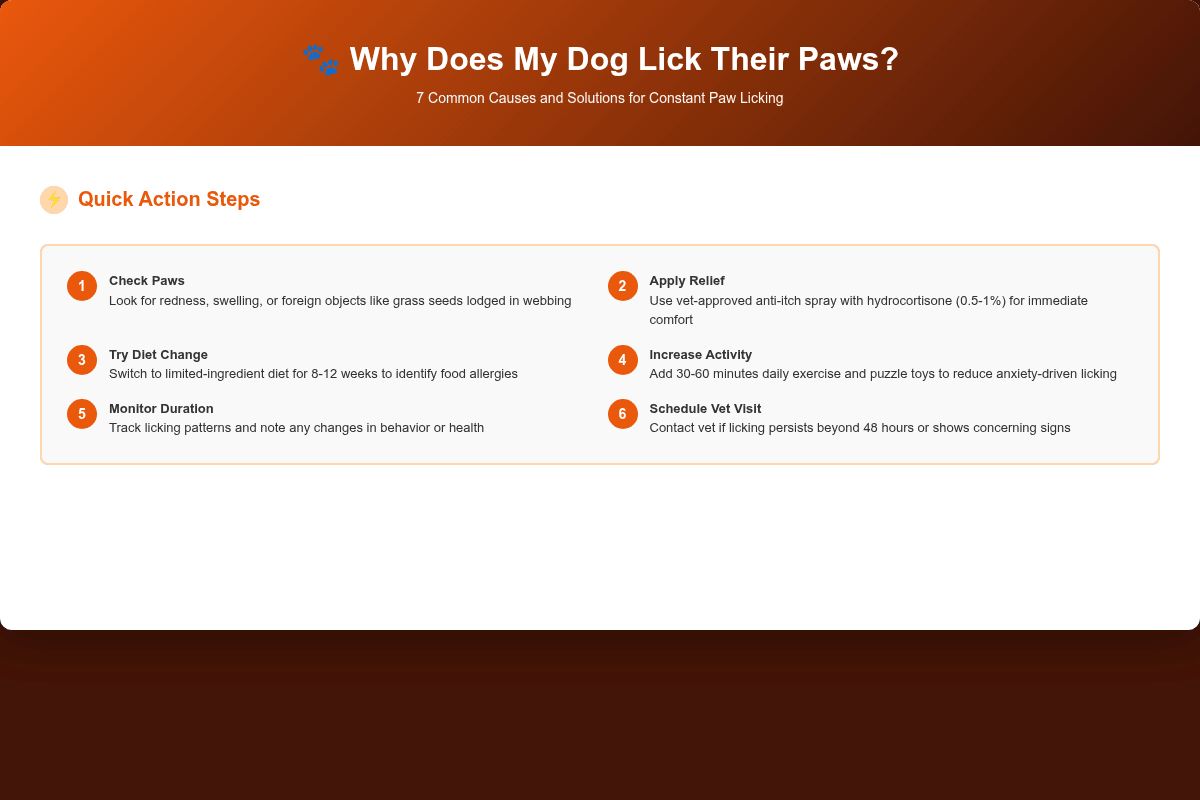
- Check between your dog’s toes for redness, swelling, or foreign objects like grass seeds or small stones that can lodge in the webbing and cause immediate irritation
- Switch to a limited-ingredient diet for 8-12 weeks to identify food allergies, which affect approximately 10-15% of dogs with chronic paw licking
- Apply a veterinary-approved anti-itch spray containing hydrocortisone (0.5-1%) for immediate relief while addressing the underlying cause
- Schedule a vet visit if licking persists beyond 48 hours, if you notice bleeding, discharge, or if your dog limps or refuses to walk
- Increase daily exercise by 30-60 minutes and add puzzle toys to reduce anxiety-driven licking behaviors that develop from boredom

Overview
You’ve probably noticed your dog suddenly fixated on their paws, licking with an intensity that seems impossible to interrupt. When your dog licking paws constantly becomes part of their daily routine, it’s more than just a quirky habit—it’s their way of telling you something’s wrong. Unlike cats who groom themselves regularly, dogs don’t typically engage in excessive paw licking unless they’re experiencing discomfort, stress, or an underlying health issue. The sound alone can drive pet owners to distraction, especially at 2 AM when that rhythmic licking echoes through a quiet house. Understanding why this behavior happens is the first step toward helping your furry friend find relief and restoring peace to your household.
Understanding Why Your Dog Licking Paws Constantly Happens
1. Allergies: The Most Common Culprit
Environmental and food allergies account for roughly 70% of chronic paw licking cases in veterinary dermatology practices. When dogs experience allergic reactions, histamines cause inflammation that concentrates in their paws, ears, and face because these areas have thinner skin and more nerve endings. Your dog isn’t actually allergic to their paws—they’re experiencing systemic inflammation that manifests in these sensitive areas.
Environmental allergens like pollen, dust mites, and mold spores typically cause seasonal flare-ups. Many owners notice their dog’s licking intensifies during spring and fall when pollen counts peak. The paws act like little mops, collecting allergens during walks and trapping them between the toes where moisture creates the perfect environment for irritation. According to the American Kennel Club, atopic dermatitis affects up to 15% of the dog population, with certain breeds like Golden Retrievers, Bulldogs, and German Shepherds showing higher susceptibility.
Food allergies present differently, causing year-round symptoms that don’t respond to seasonal changes. The most common food allergens in dogs are beef, dairy, wheat, chicken, and eggs—ironically, the ingredients found in most commercial dog foods. When a protein triggers an immune response, inflammation develops throughout the body, but dogs can only reach their paws to address the discomfort. An elimination diet trial lasting 8-12 weeks, where you feed a novel protein source your dog has never eaten, remains the gold standard for diagnosing food allergies.
2. Infections: Bacterial and Fungal Overgrowth
A warm, moist environment between your dog’s toes creates ideal conditions for bacterial and yeast infections. Staphylococcus pseudintermedius, the most common bacteria causing canine skin infections, naturally lives on your dog’s skin but multiplies rapidly when the skin barrier becomes compromised. Yeast infections, typically caused by Malassezia pachydermatis, produce a distinctive corn chip or musty odor that many owners notice before they see visible symptoms.
These infections rarely develop in isolation—they’re usually secondary to another problem like allergies or moisture trapped between the toes. Dogs with deep skin folds, floppy ears, or thick fur between their paw pads face higher infection risk because air circulation can’t dry these areas effectively. You might notice brown or rust-colored staining on light-colored fur, which comes from porphyrins in your dog’s saliva mixing with yeast organisms. The ASPCA notes that infections require veterinary treatment with prescription antibiotics or antifungal medications, as over-the-counter products rarely penetrate deep enough to resolve the problem.
3. Pain and Injuries You Might Miss
Dogs instinctively lick wounds as a self-soothing behavior, but sometimes the injury isn’t immediately visible to owners. Foxtails and grass awns can burrow into the skin between toes, creating a tiny entry point that closes over the foreign object. The resulting inflammation feels like a constant splinter, driving your dog to lick obsessively. Torn nails, pad cuts from glass or ice, and puncture wounds from stepping on thorns all trigger focused licking on specific paws.
Arthritis pain in the toes, wrists, or elbows often manifests as paw licking rather than obvious limping, especially in stoic breeds or dogs in the early stages of joint disease. A dog experiencing arthritis discomfort may lick the paw on the affected leg, attempting to address the pain they feel higher up. Ice melt chemicals used on winter sidewalks can cause chemical burns that develop hours after exposure, creating delayed-onset licking that seems to appear without cause.
4. Parasites: Mites and Fleas
Sarcoptic mange mites and demodex mites both target the paws as primary infestation sites. Sarcoptic mange causes intense itching that worsens at night, leading to frantic licking sessions that leave the paws raw and inflamed. These microscopic mites burrow into the skin, creating tunnels that trigger severe allergic reactions in most dogs. Demodex mites live in hair follicles and typically don’t cause problems unless your dog’s immune system becomes compromised, allowing mite populations to explode.
Flea allergy dermatitis can cause paw licking even when you don’t see live fleas on your dog. It only takes one or two flea bites to trigger an allergic response that lasts for weeks. Dogs allergic to flea saliva develop inflammation throughout their body, and they’ll lick their paws while also scratching their rear end and base of the tail. Year-round flea prevention remains essential even for indoor dogs, as fleas can hitchhike inside on clothing and other pets.
5. Anxiety and Behavioral Compulsion
Stress-related licking resembles human nail-biting or hair-twirling—a self-soothing behavior that can escalate into obsessive-compulsion. Dogs left alone for extended periods, those experiencing changes in household routine, or animals dealing with loud noises like construction or thunderstorms often develop anxiety-driven licking patterns. The behavior releases endorphins that temporarily calm your dog, creating a self-reinforcing cycle that’s difficult to break without intervention.
Acral lick dermatitis, also called lick granulomas, represents the extreme end of compulsive licking where dogs create open sores that never heal because they can’t stop licking. Large, active breeds like Labrador Retrievers, Great Danes, and German Shepherds develop these granulomas most frequently, often due to insufficient mental and physical stimulation. According to VCA Hospitals, treating lick granulomas requires addressing both the physical wound and the underlying behavioral trigger, often combining medications with environmental enrichment.
6. Dry Skin and Environmental Factors
Winter heating systems and low humidity environments can leave your dog’s paw pads cracked and uncomfortable. While humans apply lotion to dry hands, dogs lick their paws in an attempt to moisturize, which paradoxically makes the problem worse by removing protective oils. Exposure to salt, de-icing chemicals, hot pavement in summer, and rough surfaces can all compromise the paw pad’s natural moisture barrier.
Dogs with hypothyroidism often develop severe dry skin as their metabolism slows and oil production decreases. This hormonal condition affects middle-aged and senior dogs most commonly, causing a constellation of symptoms including weight gain, lethargy, and chronic skin problems. Regular paw balm application using products with natural ingredients like shea butter, coconut oil, and vitamin E can restore moisture and create a protective barrier against environmental irritants.
7. Contact Irritants and Chemical Sensitivities
Your dog walks barefoot through environments filled with potential irritants that we never touch with our bare skin. Lawn fertilizers, pesticides, cleaning products used on floors, and even certain carpet cleaners can trigger contact dermatitis on sensitive paw pads. Some dogs develop reactions to specific types of grass or plants in your yard, creating a pattern where licking intensifies after outdoor time.
Floor cleaners containing pine oil, phenols, or fragrances pose particular risks because dogs spend their entire lives walking on treated surfaces. Switching to pet-safe cleaning products and rinsing your dog’s paws with plain water after walks can eliminate exposure to irritants before they cause problems. Pay attention to patterns—if licking intensifies after visits to specific locations like the groomer, a friend’s house, or a particular park, environmental triggers are likely responsible.
Important Considerations
Never ignore dog licking paws constantly that persists beyond a few days, even if you don’t see obvious injuries or redness. The moisture from saliva creates secondary problems that complicate the original issue, and early intervention prevents minor irritations from becoming chronic conditions. Many owners make the mistake of using Elizabeth collars as the primary treatment, but blocking access to the paws without addressing the underlying cause simply frustrates your dog without providing relief.
Watch for warning signs that indicate your dog needs immediate veterinary attention rather than home treatment. These red flags include swelling that extends up the leg, foul odors suggesting deep infection, refusal to bear weight on the affected paw, and behavioral changes like aggression when you touch the area. Bleeding that doesn’t stop within 10 minutes of applying pressure, discharge containing pus or blood, and fever above 103°F (39.4°C) all require same-day veterinary evaluation.
The timing and pattern of licking provide diagnostic clues that help veterinarians identify causes more quickly. Keep a simple log for three to five days noting when licking occurs, which paws your dog targets, and any activities or events that preceded licking episodes. This information helps distinguish between allergies, pain, and anxiety-driven behaviors. Some owners discover that licking happens exclusively during certain times of day or only when the dog is alone, pointing toward behavioral rather than medical causes.
Be cautious with home remedies found online, as many popular suggestions can worsen the problem. Apple cider vinegar, tea tree oil, and hydrogen peroxide all can cause additional irritation or toxicity when dogs lick these substances off their paws. Stick with veterinary-approved products specifically formulated for dogs, and always consult your vet before starting new treatments, especially if your dog takes other medications.
Comparison of Common Causes and Identifying Features
| Cause | Primary Symptoms | Timing Pattern | Number of Paws Affected | Distinguishing Features |
|---|---|---|---|---|
| Environmental Allergies | Red, itchy paws; brown staining | Seasonal (spring/fall peaks) | All four paws equally | Concurrent ear infections, face rubbing |
| Food Allergies | Year-round itching; GI symptoms | Consistent, no seasonal variation | All four paws equally | Doesn’t improve with allergy medication |
| Bacterial Infection | Redness, swelling, odor | Worsens without treatment | Often starts with one paw | Warm to touch, possible discharge |
| Yeast Infection | Musty/corn chip smell, brown discharge | Worse in humid weather | Usually multiple paws | Greasy feel to fur, ear involvement common |
| Pain/Injury | Focused licking on one spot | Sudden onset | Typically one paw only | Limping, reluctance to walk |
| Anxiety | No visible skin changes initially | Increases when alone or stressed | Often front paws | Responds to distraction, other anxiety signs present |
| Dry Skin | Flaky, rough paw pads | Worse in winter months | All four paws | Dandruff on coat, pad cracking visible |
Frequently Asked Questions
How can I tell if my dog’s paw licking is serious or just a habit?
Monitor the frequency, duration, and your dog’s response to distraction. If your dog immediately stops licking when you call them or offer a toy, it’s likely a mild irritation or habit, but if they return to licking within minutes or seem unable to stop even when distracted, the underlying cause requires veterinary attention. Any licking that creates visible skin changes, hair loss, or open sores should be evaluated by a vet within 24-48 hours.
Will my dog’s paw licking stop on its own without treatment?
Occasional, brief paw licking after walks or meals can resolve independently as your dog removes debris or cleans themselves, but chronic or intense licking indicates an underlying problem that won’t improve without addressing the root cause. Waiting for spontaneous improvement allows secondary infections to develop and behavioral
Disclaimer: This article is for informational purposes only and is not a substitute for professional veterinary advice. Always consult your vet for your pet’s health concerns.