
Quick Summary
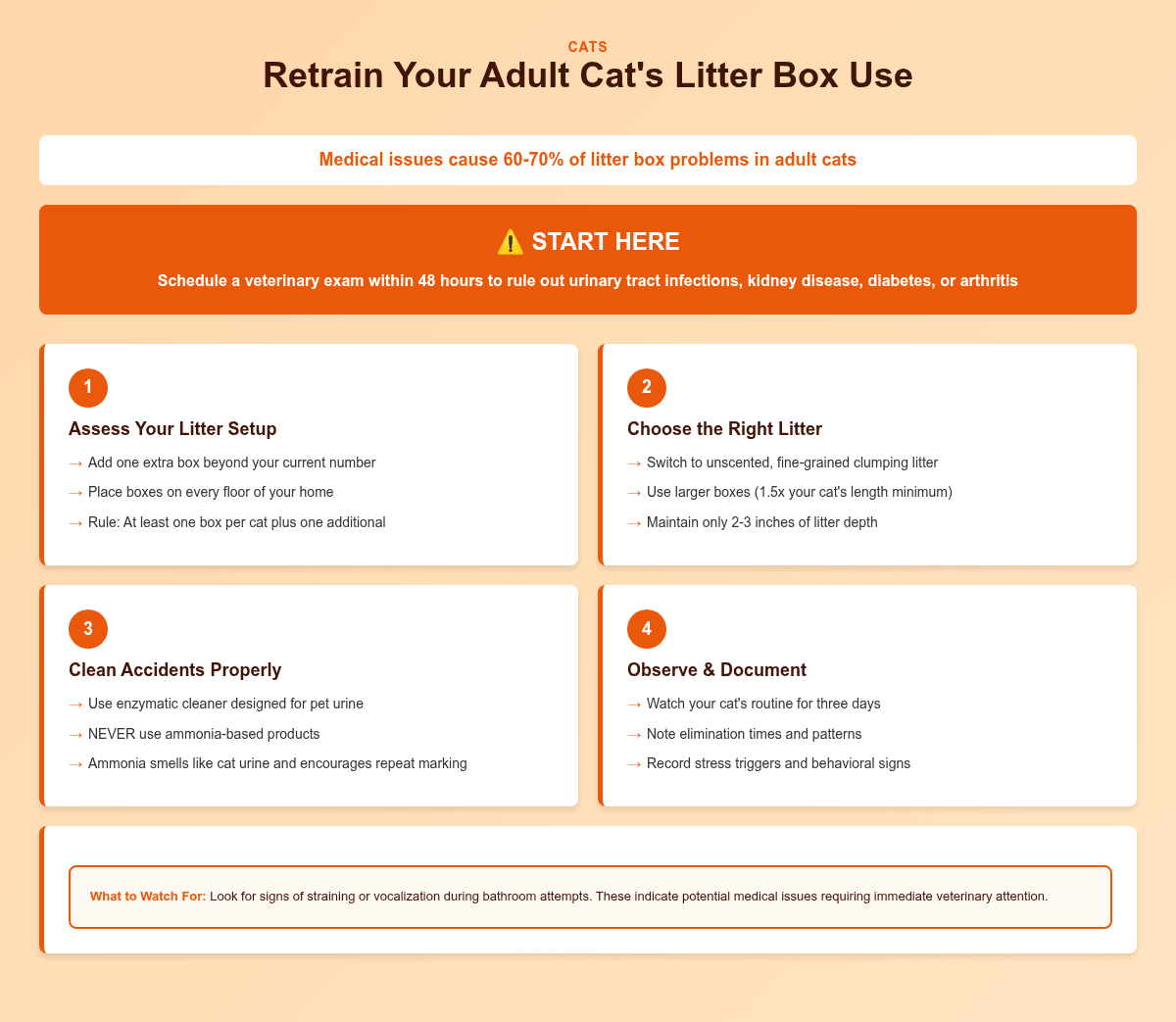
- Schedule a veterinary exam within 48 hours to rule out urinary tract infections, kidney disease, diabetes, or arthritis—medical issues cause 60-70% of litter box problems in adult cats
- Add one extra litter box beyond your current number and place boxes on every floor of your home, ensuring at least one box per cat plus one additional
- Switch to unscented, fine-grained clumping litter in larger boxes (at least 1.5 times your cat’s length) with only 2-3 inches of litter depth
- Clean accidents with enzymatic cleaner specifically designed for pet urine, never ammonia-based products that smell like cat urine and encourage repeat marking
- Observe your cat’s routine for three days, noting elimination times, stress triggers, and any signs of straining or vocalization during bathroom attempts
Overview
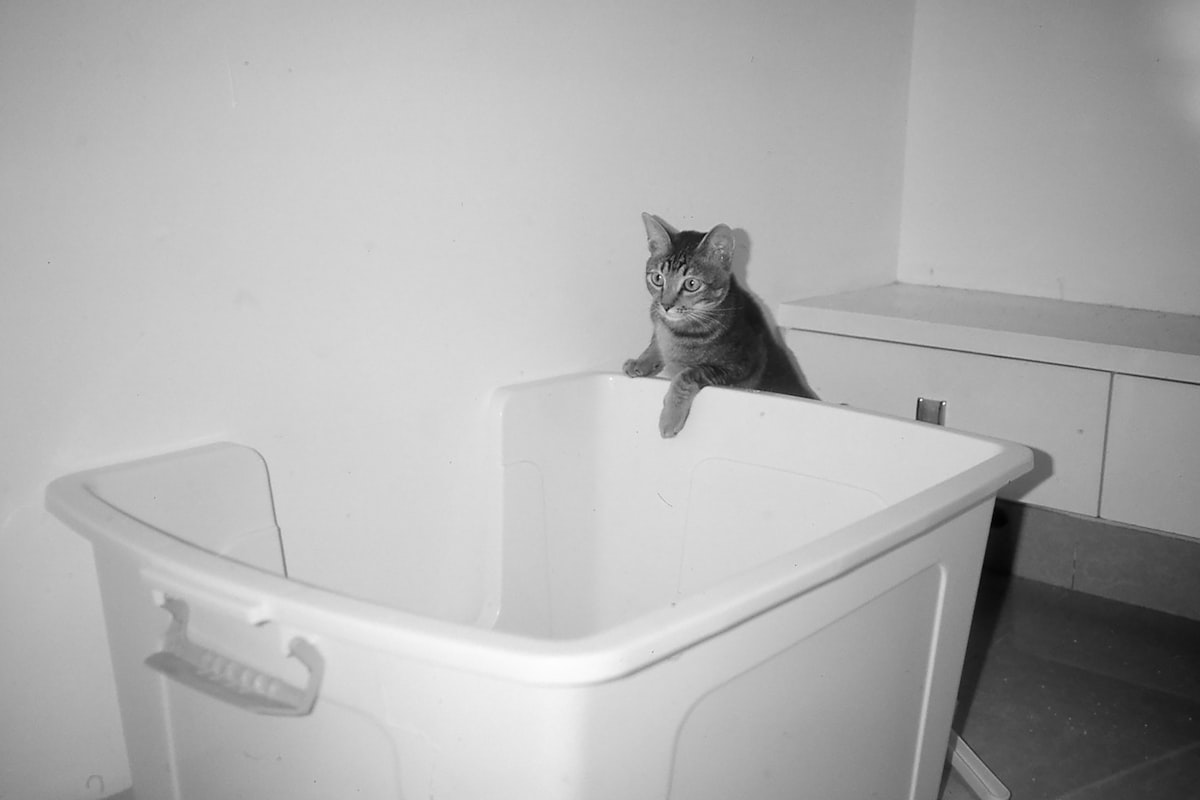
When your cat stopped using litter box consistently, the anxiety hits immediately. You’re finding urine on your bed, feces behind the couch, or puddles near the bathroom—and you’re questioning everything you thought you knew about your feline companion. This behavioral change rarely happens without reason, and the good news is that most cases are entirely solvable once you identify the underlying cause. Adult cats don’t abandon their instinctive preference for burying waste out of spite or stubbornness. Instead, they’re communicating distress, discomfort, or dissatisfaction through the only language available to them. Whether your cat stopped using the litter box suddenly or gradually, understanding the troubleshooting process will help you restore harmony to your household and comfort to your pet.
Understanding Why Your Cat Stopped Using the Litter Box
The first truth every cat owner must accept is that inappropriate elimination is almost never a behavioral issue until you’ve definitively ruled out medical problems. Cats are remarkably stoic creatures, often hiding pain until conditions become severe. A cat experiencing painful urination will associate that pain with the litter box itself, leading them to seek alternative locations in hopes of avoiding discomfort. Urinary tract infections, bladder stones, kidney disease, diabetes, hyperthyroidism, and arthritis all commonly manifest as litter box avoidance.
According to research supported by the American Veterinary Medical Association, urinary issues affect approximately 3% of cats annually, with middle-aged and senior cats at highest risk. Your veterinarian will perform a urinalysis, potentially blood work, and a physical examination to identify or exclude these conditions. Some cats with severe arthritis struggle to climb into high-sided boxes or navigate stairs to reach the box location, making elimination elsewhere a necessity rather than a choice.
Once medical issues are addressed or ruled out, the investigation shifts to environmental and psychological factors. Cats possess extraordinarily sensitive sensory systems and surprisingly rigid preferences about their bathroom facilities. A litter box that worked perfectly for years may suddenly become unacceptable due to a single traumatic experience—perhaps your cat was startled by a loud noise while using it, or another pet ambushed them upon exiting. These isolated incidents can create lasting aversions that persist long after the trigger disappears.
The Systematic Retraining Process
Start by treating your home like a crime scene investigation, documenting every instance of inappropriate elimination. Note the specific locations, the time of day, whether it’s urine or feces, and what happened in the hours preceding each incident. Many owners discover patterns they’d otherwise miss—perhaps accidents only occur when you’re away at work, or exclusively on soft fabrics like towels and clothing. These patterns reveal whether you’re dealing with anxiety-based marking, location preferences, or substrate preferences.
Simultaneously, perform a complete litter box audit. Count your boxes and compare that number to the ideal formula: one box per cat, plus one additional box. A single-cat household should have two boxes minimum, preferably on different floors. Multi-cat homes require strategic placement so subordinate cats aren’t forced to pass through a dominant cat’s territory to reach bathroom facilities. Box size matters tremendously—most commercial litter boxes are absurdly small for average-sized cats. Your box should measure at least 1.5 times your cat’s body length from nose to tail base, giving them ample room to turn, dig, and position themselves comfortably.
The litter itself deserves scrutiny. While you might prefer scented, crystalline, or alternative litters, research from VCA Hospitals consistently shows that most cats prefer fine-grained, unscented clumping litter that mimics the texture of sand or soil. If you’ve recently changed litter brands or types, this switch alone could explain the problem. Make any litter transitions gradually over 7-10 days, mixing increasing proportions of new litter with the old formula. Fill boxes to a depth of just 2-3 inches—deeper litter doesn’t improve acceptance and makes some cats uncomfortable.
Location changes require equal care. Litter boxes belong in quiet, low-traffic areas where your cat feels secure and can see approaching threats. Laundry rooms next to loud, vibrating washers create anxiety. Boxes tucked in closets or behind furniture limit escape routes. Basements accessed only by steep stairs become inaccessible to arthritic cats. Position at least one box in the general vicinity where accidents are occurring—if your cat consistently eliminates in the spare bedroom, that room needs a properly maintained litter box immediately.
Cleaning represents the final crucial piece of retraining. Eliminate every trace of urine odor from accident sites using enzymatic cleaners specifically formulated for pet waste—products like Nature’s Miracle or Simple Solution break down the uric acid crystals that standard cleaners leave behind. Even after surfaces appear and smell clean to humans, cats detect residual scent marking those areas as acceptable bathroom locations. Never use ammonia-based cleaners, as ammonia mimics the smell of cat urine and actually encourages repeat elimination. For washable items, add enzymatic cleaner to the washing machine along with detergent, and consider a second wash cycle for heavily soiled fabrics.
Addressing Stress-Related Elimination
Beyond physical setup, psychological factors frequently drive litter box avoidance. Cats are creatures of routine who experience stress from changes humans barely notice—a new work schedule, furniture rearrangement, construction noise from neighbors, or subtle shifts in household dynamics. According to the ASPCA, environmental stressors contribute to elimination problems in approximately 30% of cases, often in combination with other factors.
Multi-cat tension deserves particular attention. Even cats who have coexisted peacefully for years can develop conflicts that manifest as litter box problems. Watch for signs of passive aggression: one cat blocking another’s path, staring contests, or simply occupying doorways and hallways. The intimidated cat may avoid litter boxes in certain areas entirely, leading to accidents in “safer” locations. Providing vertical territory like cat trees, increasing the number of feeding stations, and creating multiple exit routes from litter box areas all help reduce territorial stress.
Some cats develop specific substrate or location preferences through positive reinforcement. A cat who urinated once on your soft bathroom rug and found it pleasant may return repeatedly. For these cases, temporarily remove preferred targets—store clothing in closets, pick up bath mats, close bedroom doors—while making litter boxes maximally appealing. Experiment with different litter textures by offering multiple boxes with various substrates: standard clumping litter, paper-based litter, even a box with potting soil for cats with strong outdoor preferences.
Important Considerations
The timeline for retraining varies dramatically based on underlying causes and how long the problem has persisted. A cat with a two-week-old issue often responds within days to proper intervention, while a problem that’s continued for months may require 6-8 weeks of consistent effort. Patience and consistency are non-negotiable—reverting to old habits or giving up on environmental modifications prematurely guarantees failure.
Never punish a cat for inappropriate elimination. Yelling, rubbing their nose in waste, or confining them near accident sites worsens anxiety and strengthens negative associations with elimination itself. Cats lack the cognitive connection between punishment and the “crime,” especially if any time has passed since the incident. Punishment teaches your cat to fear you, not to use the litter box.
Watch for signs that retraining isn’t progressing as expected. If your cat strains, cries out during elimination, produces bloody urine, or makes frequent trips to the litter box with little output, contact your veterinarian immediately. These symptoms suggest urinary blockage, which constitutes a life-threatening emergency particularly in male cats. Similarly, if your cat loses appetite, becomes lethargic, or shows dramatic behavioral changes beyond the litter box issue, additional medical investigation is warranted.
Some situations legitimately require professional intervention. Veterinary behaviorists—board-certified specialists in animal behavior—can evaluate complex cases involving severe anxiety, inter-cat aggression, or persistent problems resistant to standard interventions. Your general practice veterinarian can provide referrals to these specialists or to certified cat behavior consultants who offer in-home assessments.
Litter Box Problem Diagnosis Reference
| Symptom Pattern | Most Likely Cause | Priority Action |
|---|---|---|
| Sudden onset, frequent small amounts of urine, straining | Urinary tract infection or blockage | Emergency vet visit within 24 hours |
| Gradual onset, urine only, vertical surfaces | Stress-related marking behavior | Address environmental stressors, consider Feliway diffusers |
| Only when owner absent, various locations | Separation anxiety | Gradual desensitization to departures, environmental enrichment |
| Feces outside box, urine inside box | Box cleanliness issue or arthritis | Scoop twice daily, provide lower-sided box |
| Senior cat, accidents near box | Arthritis or cognitive decline | Provide boxes on every floor, non-slip mats, higher litter walls |
| After litter/box changes | Substrate or box preference | Return to previous setup, make changes gradually |
Frequently Asked Questions
How long does it take to retrain a cat to use the litter box?
Most cats respond to proper intervention within 2-4 weeks if medical issues are addressed and environmental modifications are consistent. Cases involving long-standing habits or severe anxiety may require 6-8 weeks of dedicated effort before you see reliable improvement.
Can I use citrus or mint sprays to keep my cat away from accident spots?
While deterrent sprays may temporarily discourage your cat from specific areas, they don’t address the underlying cause and often just relocate the problem. Focus instead on thorough enzymatic cleaning and making the litter box more appealing than alternative locations.
Should I confine my cat to a small room with the litter box to retrain them?
Brief confinement (3-5 days) in a bathroom or large closet with food, water, and a litter box can help reset bathroom habits for some cats, but this approach primarily works for cats with location preferences rather than medical or anxiety issues. Never use confinement as punishment, and ensure the space is comfortable with enrichment items.
My cat uses the litter box sometimes but not always—what does this mean?
Inconsistent litter box use typically indicates your cat finds the box acceptable under some circumstances but not others, suggesting issues with box cleanliness, location accessibility, or competition from other pets. Add additional boxes in different locations and maintain scrupulous scooping schedules to identify which factors matter most to your cat.
Final Thoughts
Begin with that veterinary appointment, implement environmental changes systematically, and give your cat the time needed to relearn that the litter box is the safe, comfortable place it should be—most cases resolve completely when owners address the actual cause rather than the symptom.
This article provides general guidance based on veterinary research and feline behavior science. Always consult with your veterinarian for advice specific to your cat’s individual health needs and circumstances.
Disclaimer: This article is for informational purposes only and is not a substitute for professional veterinary advice. Always consult your vet for your pet’s health concerns.